
Built by Crew: Why Yacht Solutions Work Better When You’ve Actually Worked Onboard
Updated: Sep 5
According to BOATPro’s Global Fleet Tracker, the current global fleet is made up of 6, 423 superyachts over 30 metres. With growing fleets, charter operations are dealing with tighter regulations, and rising demands from guests and owners. Crew rotate often. And the cracks are starting to show.
The tools many yachts still rely on - email, WhatsApp, scattered files - were never built for this level of load.
As yachts grow in scale, operations become layered. Teams need more structure. The bar rises across leadership, service delivery, and technical skill.

After 15 years onboard – including time as a CTO at sea – Guest Trip’s founder, Adam Cornelius, saw the pattern:
"Crew-built businesses often outperform vendor-built yacht solutions because they’re designed around real workflows under pressure."
The reason is simple. Priorities change when you have had to fix things mid-charter, mid-crossing, mid-crisis. You design for what matters when there is no time to pause - not for what looks good on a website.
Some of the most effective changes in yachting today come from crew who lived the problem before trying to solve it. Years onboard gives you a deep understanding of how yacht operations connect - not just isolated pain points, but how one failure ripples through the whole system.
This is not “pressure” in the shore-based sense - the neat kind that lives in calendars and ends when you commute home. On a yacht, pressure has real consequences. Guests expect perfection without seeing the effort behind it. Crew work on little sleep and high standards. The vessel is moving. Plans change by the hour. When something fails, it does not fail quietly - it lands fast on the people keeping the experience smooth.
And there is no true clock-off. You live where you work. You eat, sleep, and reset in the same space that demands precision. Distance from pressure is rare. At best, there are brief moments to absorb it, deal with it, and carry on.
In this blog, we look at why this gap exists, what vendors often miss, and what yacht systems need to look like if they are going to be trusted and actually used onboard.
The onboard reality
You are half-awake. Your phone buzzes. Someone asks, “Can you just update the plan for tomorrow?” as if it is a quick edit.
But tomorrow’s plan is not a plan. It is a living operating system. You do not truly test a system until you use it underway – when guests change their minds again, shoreside bookings need chasing, and three departments ask different versions of the same question at once.

Why most vendor tools miss the mark
This is where the vendor myth shows up.
Plenty of companies say, “We work with yachts.” They’ve delivered installs, attended meetings, done owner presentations, produced a beautiful interface, and publish polished feature lists. None of that means they understand life onboard.
Working with yachts and working on yachts are not the same thing. Most vendor tools are built for certainty: stable Wi-Fi, predictable days, clean rollouts, time to train. Yacht operations are optimised for anything but this. The work happens inside constraints - time zones shift, bandwidth alters, plans change, crew rotate, and the relentless requirement that guests experience none of it. Systems built for ideal conditions crumble in reality.
That’s why vendors usually optimise for features, while crew optimise for survival. Vendors design for slick demos; crew need tools that work reliably at sea, under pressure.
What buyers should ask regarding yacht charter itinerary systems
Captains, crew, charter brokers, and yacht owners should ask this:
Who built this, and did they work on board?
Can a new broker or crew member use it with no handover?
What happens when it fails mid-charter?
If the answers are vague, you may be buying a problem.
Vendors assume adoption happens because the owner paid. Crew know adoption only happens when a tool genuinely makes life easier. Onboard, “smart yacht tech” is sorted fast into two groups: systems the crew use, and systems quietly replaced with WhatsApp threads and screenshots.
Which leads to the core truth in yacht tech: Crew adoption is the product.
If the chief stew doesn’t love it, it doesn’t exist.
If the captain doesn’t trust it, it doesn’t exist.
If it crashes at 2am, it doesn’t exist.
There’s another reality vendors often miss: handover. Crew turnover is normal. Rotations change. Relief crews come and go. Seasons shift. Knowledge leaves the boat as easily as guests step ashore.
If a system only works because one person understands it, it is not a system. It is a single point of failure with a login.
And then there is support. If your support is not close to 24/7, you are not a yacht supplier. Boats move. Time zones shift. When something breaks onboard, help is needed now – not on Monday morning.

The solution pattern: what actually works onboard
Systems that survive real yacht operations share a few non-negotiable traits. They are not glamorous. They rarely fit into marketing pitch decks. But they are the difference between tools crew rely on and tools they abandon.
Design for the worst day, not the best day
Good yacht tech plans for the chaos. Assume poor connectivity at the worst moment. Assume guests will change plans. Assume crew are tired and service is live. Assume someone new may need to pick it up tomorrow without a half day handover.
Reduce cognitive load
Crew don’t need tasks that burn more time. They need simple workflows, clear structure, and fast access to the right information. Tools should make decisions easier, not introduce new “ways to do it” that become yet another thing to manage.
Make everything handover-proof
Systems must survive rotation, relief crew, and seasonal shifts. That means clear structure, intuitive navigation, consistent outputs, and permissions that reflect how departments actually work.
Treat adoption as a feature
If it is not obviously easier than the current messy system, crew will not use it - no matter how premium it looks. Behaviour only changes when workload drops immediately.
Support is part of the product
Selling to yachts means showing up when it matters. During a live charter, support must think like the boat: constantly alert, pragmatic, and ready to solve issues at any hour.
What we’re building and what we’ve learned
This is exactly why we’re building Guest Trip the way we are.
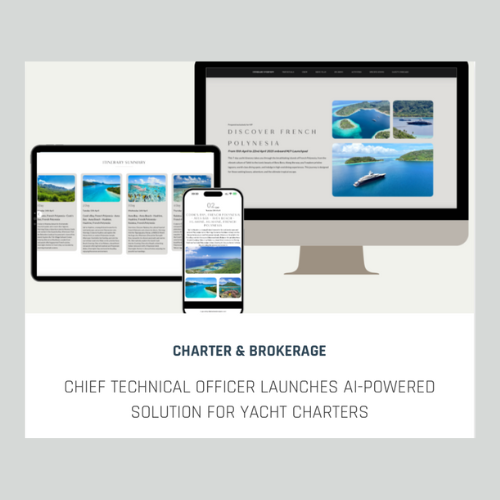
It was developed as a crew and charter-broker-first tool based on real-world experience, rather than as a yacht charter itinerary system built from the boardroom up. Different time zones, inconsistent connectivity, and the demands of delivering faultless experiences with no room for error are all aspects of operational reality.
Guest Trip focuses on the things that matter onboard: clarity over complexity, speed over aesthetic itinerary templates, structure that survives handovers, and workflows that still make sense when plans change mid-charter. The aim is straightforward: reduce the admin drag that quietly steals time and energy from guest experience and crew downtime.

Guest Trip's competitive strengths:
Real-world operational knowledge:
Founded by Adam Cornelius, a CTO who lived and worked onboard and understands daily crew pressures, workflows, and pain points first-hand.
Guest Trip is a solution based on actual experience, not assumptions about what yachts need.
2. Technical depth:
Founder Adam Cornelius has deep AV/IT systems expertise.
Built by someone who has troubleshot AV and IT systems at sea, with full awareness of integration limits and guest expectations.
3. Credibility:
Backed by recognised thought leadership and media coverage that positions Guest Trip as an innovator, not just another software or system vendor.
Actionable takeaways (for crew founders and for buyers)
If you’re crew with an idea, don’t build a brand. Build relief. Pick one pain point and fix it well. Your advantage is simple: you know what reality looks like under pressure; use that. Build around the moments that make crew swear under their breath – because those moments reveal what actually needs fixing.
Do not build for owners. Build for the user with no time to think. Make adoption your KPI. If a chief stew does not like it within one charter week, simplify it again.
Make it handover-proof. Treat support as your moat. In yachting, fast, capable support builds more trust than the most elegant branding or sales pitches over broker breakfasts.
Future-proofing for an evolving industry
Today’s yachts move through layered jurisdictions and complex supplier webs. Smart systems are no longer optional or experimental – they sit at the centre of how superyachts function. Life at sea has little patience for aesthetic presentations or theory. What holds value is what performs underway, under strain, with guests on board and real consequences. Well-built systems now have the capability to ease the load and support crew at every level.
Source: BOATPro


Comments